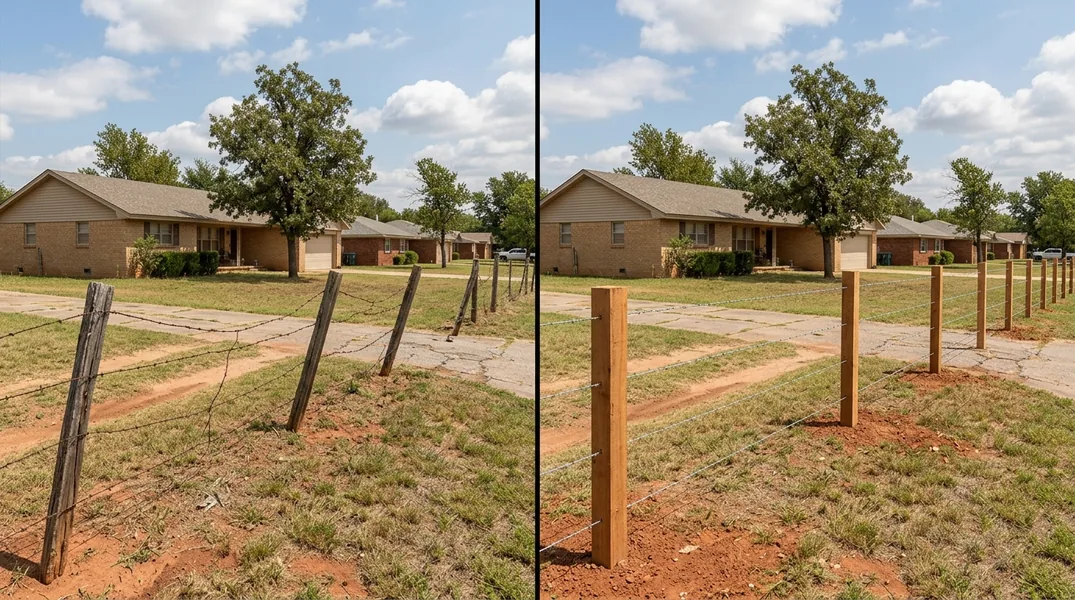
Understanding Oklahoma City's Clay Soil and Its Impact on Fences
If you own a home in Oklahoma City, you're likely familiar with the challenges that come with the region's distinctive clay soil. This heavy, dense soil composition creates a unique environment that directly affects how long a fence will last. Unlike sandy or loamy soils found in other parts of the country, Oklahoma's clay expands when wet and contracts when dry, creating constant movement and pressure against fence posts and foundations.
This soil behavior is more than just an interesting geological fact, it's a critical factor that homeowners must consider when planning a fence installation. The expansive nature of clay soil can cause fence posts to shift, heave upward during wet seasons, and settle unevenly as moisture levels fluctuate throughout the year. Understanding these dynamics helps explain why fence longevity in Oklahoma City differs significantly from other regions, and why choosing the right fence type and installation method is so important for protecting your investment.
How Long Different Fence Types Last in Oklahoma's Climate
Wood & Privacy Fence Installation is a popular choice for Oklahoma homeowners, but wood's lifespan in this region requires careful consideration. A well-maintained wood fence typically lasts between 10 to 15 years in Oklahoma City's clay soil environment. The combination of moisture fluctuations, temperature swings, and soil movement can accelerate wood decay and compromise structural integrity faster than in drier climates. However, with proper treatment, regular maintenance, and quality wood selection, some homeowners have seen their wood fences last up to 20 years.
Vinyl & PVC Fence Installation offers superior longevity in Oklahoma's challenging soil conditions. Vinyl fences typically last 20 to 30 years or more because they resist moisture absorption and don't rot like wood. The clay soil's movement is less damaging to vinyl since it doesn't degrade from contact with damp earth. Chain Link Fence Installation provides another durable option, with galvanized or vinyl-coated chain link lasting 15 to 20 years depending on maintenance and coating quality. Aluminum & Ornamental Iron Fencing can last 20 to 30 years when properly maintained, though iron requires regular rust prevention measures in Oklahoma's humid summers.
Wood & Privacy Fence Installation Cost in Oklahoma City: What to Budget
When homeowners ask about fence costs, they're typically looking at several variables that directly impact the final price. The fence cost per linear foot in Oklahoma City generally ranges from $15 to $30 for basic chain link, $20 to $40 for vinyl, and $25 to $50 for quality wood privacy fencing. These figures reflect material costs, labor complexity, and local market conditions. The actual cost to fence a yard depends heavily on your property's perimeter, terrain challenges, and soil conditions. A typical residential yard of 150 linear feet might cost anywhere from $3,000 to $7,500 for wood privacy fencing, depending on wood grade and design complexity.
The fence installation labor cost represents a significant portion of your total investment, often comprising 40 to 50 percent of the final bill. Oklahoma City's clay soil actually increases labor costs because proper post installation requires deeper holes, concrete footings, and careful attention to drainage to combat soil heave. Professional installers must account for these soil-specific challenges, which adds to the overall expense but protects your fence's longevity. When comparing quotes from different contractors, remember that the cheapest option isn't always the best value, especially when dealing with Oklahoma's unique soil conditions. A contractor experienced with local soil challenges will build your fence to last longer and perform better over time.
Protecting Your Fence Investment: Maintenance and Soil Considerations
The key to extending your fence's lifespan in Oklahoma City's clay soil environment is understanding that installation is just the beginning. Proper post installation using concrete footings set below the frost line is essential, but ongoing maintenance makes the real difference. For wood fences, annual staining or sealing protects against moisture penetration, which is critical in a region where clay soil retains water for extended periods. Regular inspections for rot, loose boards, and leaning sections allow you to catch problems early before they compromise the entire structure.
Drainage around your fence line also plays a crucial role in longevity. If water pools around fence posts during heavy rains, the clay soil's moisture retention will accelerate decay and post heave. Grading your yard to direct water away from the fence, maintaining gutters that don't drain near fence lines, and ensuring proper post drainage all contribute to a longer-lasting fence. Additionally, keeping vegetation trimmed back from the fence prevents moisture buildup and allows air circulation, which helps prevent rot and pest damage. These maintenance practices are especially important in Oklahoma where seasonal weather patterns create dramatic wet and dry cycles that stress fence structures year-round.
Choosing the Right Fence Type for Oklahoma City's Clay Soil
Your choice of fence material should account for Oklahoma's specific environmental challenges. If you're drawn to the classic appearance of wood, plan for more frequent maintenance and earlier replacement. If longevity is your priority, vinyl or aluminum options offer significantly longer service lives with minimal maintenance demands. Some homeowners find a middle ground by choosing vinyl fencing that mimics the appearance of wood, combining aesthetic appeal with the durability vinyl provides in challenging soil conditions. Whatever material you select, working with a contractor experienced in Oklahoma City installations ensures your fence is built to withstand local soil behavior and weather patterns.
The decision ultimately comes down to balancing your budget, aesthetic preferences, and long-term maintenance commitment. A vinyl fence might cost more upfront but could save thousands in replacement and maintenance costs over 30 years compared to wood. A wood fence offers that warm, natural look many homeowners love but requires regular care and earlier replacement. Understanding how these factors interact with Oklahoma's clay soil helps you make an informed decision that aligns with your property goals and lifestyle. If you're uncertain which option best fits your situation, Oklahoma City Fencing can help you evaluate your specific needs and soil conditions.
Getting a Professional Assessment: Your Next Steps
The best way to understand how long a fence will last on your specific property is to have a professional evaluate your soil conditions, drainage patterns, and property layout. Oklahoma City Fencing has years of experience working with clay soil challenges throughout the region, and our team can provide insights specific to your location and needs. We'll discuss how your yard's unique characteristics affect fence longevity and help you understand the true cost of ownership for different fence types over time.
Ready to move forward with your fence project? Contact Oklahoma City Fencing at (405) 813-5285 to schedule a free estimate and discuss your options with someone who understands Oklahoma City's soil challenges. Whether you're considering Wood & Privacy Fence Installation, vinyl alternatives, or exploring other materials, we're here to help you make the best decision for your property and budget.
Looking for a professional tree service in Oklahoma City? Oklahoma City Fencing responds fast for all your fence needs.
Get a Free Quote