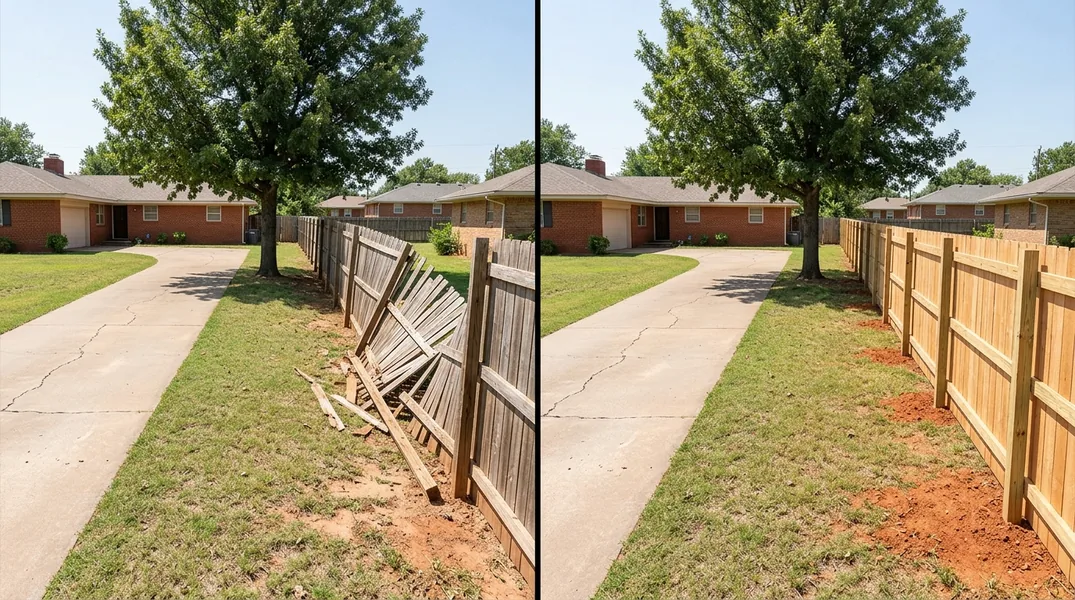
Understanding Oklahoma's Extreme Weather Challenges
Living in Oklahoma City means preparing for some of the most unpredictable and severe weather in the nation. Straight-line winds can exceed 60 miles per hour, ice storms can coat fences with several inches of frozen precipitation, and summer thunderstorms bring hail and debris that test the structural integrity of any outdoor installation. Your fence is often the first line of defense for your property, and when it fails during a weather event, the consequences can be costly and dangerous.
The Sooner State's weather patterns create unique challenges for fence owners. Unlike regions with more moderate climates, Oklahoma homeowners must consider not just aesthetics and privacy, but also resilience and durability. Whether you have a Wood & Privacy Fence Installation or another type of fencing, understanding how to brace and maintain your fence against these conditions is essential for long-term protection of your investment.
How Straight-Line Winds Damage Fences
Straight-line winds, sometimes called derechos, are among the most destructive weather phenomena in Oklahoma. Unlike tornadoes, which rotate, straight-line winds move in a relatively straight path with tremendous force. When these winds hit a fence, they create enormous lateral pressure on the posts and panels. Wood fence sections can split, vinyl panels can crack, and entire sections can be lifted from the ground if not properly braced and installed.
The damage typically occurs because wind pushes against the broad surface area of fence panels, creating a lever effect on the posts. If posts are not deep enough, not properly braced, or if the concrete foundation is insufficient, the entire fence can fail. This is why professional installation matters tremendously. When you hire Oklahoma City Fencing for your Wood & Privacy Fence Installation, our team ensures that posts are set to appropriate depths with quality concrete, and that bracing systems are in place to handle Oklahoma's wind loads.
Ice Storms and Weight Accumulation on Fencing
Ice storms present a different but equally serious threat to fencing. When ice accumulates on fence panels, the weight can be substantial. A single inch of ice can add hundreds of pounds to a fence section. This additional weight places tremendous stress on the posts and their concrete foundations. Over time, or in severe storms, this can cause posts to lean, crack, or fail entirely. The freeze-thaw cycle that follows makes the problem worse, as expanding and contracting ice can loosen connections and weaken the structural integrity of your fence.
Wood fences are particularly vulnerable to ice damage because wood absorbs moisture and can swell when wet, then shrink when dry. This constant movement, combined with the weight of ice, accelerates deterioration. Proper drainage around fence posts and adequate spacing between panels can help minimize ice accumulation. Additionally, ensuring that your fence has proper bracing and that posts are set deep enough with solid concrete foundations will help it withstand the weight and stress of ice storms common to the Oklahoma City area.
Bracing Techniques for Oklahoma Weather Resistance
Effective bracing is the key to a fence that can withstand Oklahoma's severe weather. Professional fence installers use several proven techniques to reinforce fences against wind and ice damage. Post depth is the foundation of a strong fence. Posts should typically be set at least one-third of their total length into the ground, with proper concrete footings that extend below the frost line. In Oklahoma, this typically means posts should be set 24 to 36 inches deep, depending on soil conditions and fence height.
Beyond post depth, cross-bracing and reinforcement materials make a significant difference. Many professional installations include diagonal bracing on the back or front of fence sections, which distributes lateral forces more evenly across the structure. For Wood & Privacy Fence Installation, additional support posts spaced closer together can reduce the span of each panel and decrease the leverage that wind can exert. Quality concrete mixes, proper post spacing, and the use of pressure-treated lumber rated for ground contact all contribute to a fence that can handle extreme weather. When you need professional guidance on bracing your fence, contact Oklahoma City Fencing at (405) 813-5285 to discuss the best approach for your property.
Material Selection for Weather Durability
The material you choose for your fence significantly impacts its ability to withstand Oklahoma weather. Wood fences offer classic beauty and privacy but require more maintenance and careful installation to resist weather damage. Pressure-treated lumber is essential for any wood fence in Oklahoma, as it resists rot and decay caused by moisture exposure. However, even treated wood can fail if not properly installed with adequate bracing and drainage considerations.
Vinyl & PVC Fence Installation offers excellent weather resistance, as vinyl does not rot, absorb moisture, or require painting. Vinyl is also less likely to develop the weak points that develop in wood over time. Chain Link Fence Installation provides superior wind resistance because the open design allows wind to pass through rather than pushing against a solid surface. Aluminum & Ornamental Iron Fencing combines durability with aesthetic appeal and handles Oklahoma weather well when properly installed. Regardless of material, the quality of installation and the attention to proper post setting and bracing are what ultimately determine how well your fence will perform during extreme weather events.
Maintenance and Inspection for Long-Term Weather Protection
Installing a weather-resistant fence is only half the battle. Regular maintenance and inspection are crucial for ensuring your fence remains strong year-round. After severe weather events, inspect your fence for signs of damage, including leaning posts, cracked panels, loose connections, or separated joints. Early detection of problems allows for repairs before minor damage becomes catastrophic failure. In Oklahoma, it is wise to inspect your fence at least twice per year, ideally in spring after winter weather and in fall before the severe weather season.
For wood fences, this includes checking for rot, ensuring drainage is working properly around posts, and resealing or staining the wood as needed. For vinyl and other materials, look for cracks, loose panels, or corrosion. Keep debris cleared from around your fence line to prevent water pooling and to reduce the weight accumulation during ice storms. If you notice any damage or if you are concerned about your fence's ability to withstand the next storm, reach out to Oklahoma City Fencing for a free estimate and professional assessment. Our team can recommend repairs, reinforcements, or upgrades that will give you peace of mind when severe weather arrives.
Looking for a professional tree service in Oklahoma City? Oklahoma City Fencing responds fast for all your fence needs.
Get a Free Quote